Total Productive Maintenance: Unlocking Operational Excellence
Total Productive Maintenance (TPM) stands as a cornerstone in the realm of operational excellence, revolutionizing the way organizations manage and maintain their equipment. In this article, we'll explore the essence of TPM, its principles, and how it plays a pivotal role in optimizing operations, all within a modern, responsive framework.
Understanding Total Productive Maintenance
At its core, TPM is a holistic approach aimed at maximizing the efficiency and effectiveness of production equipment. It goes beyond the traditional "fix it when it breaks" mentality, emphasizing proactive and preventive maintenance. This strategy involves every team member in the maintenance process, creating a collective responsibility for the health and performance of machinery.
Key Principles of TPM
TPM operates on a set of fundamental principles: Proactive Maintenance, Employee Involvement, and Continuous Improvement.
The Importance of TPM
TPM holds immense significance in enhancing operational efficiency. By proactively addressing equipment issues, organizations experience reduced downtime, improved productivity, and lower maintenance costs. The systematic approach of TPM fosters an agile and responsive operational framework.
Goals of TPM
The primary goals of TPM include achieving zero breakdowns, zero defects, and zero accidents. These ambitious objectives drive organizations towards a state of optimal performance and reliability.
The Eight Pillars of TPM
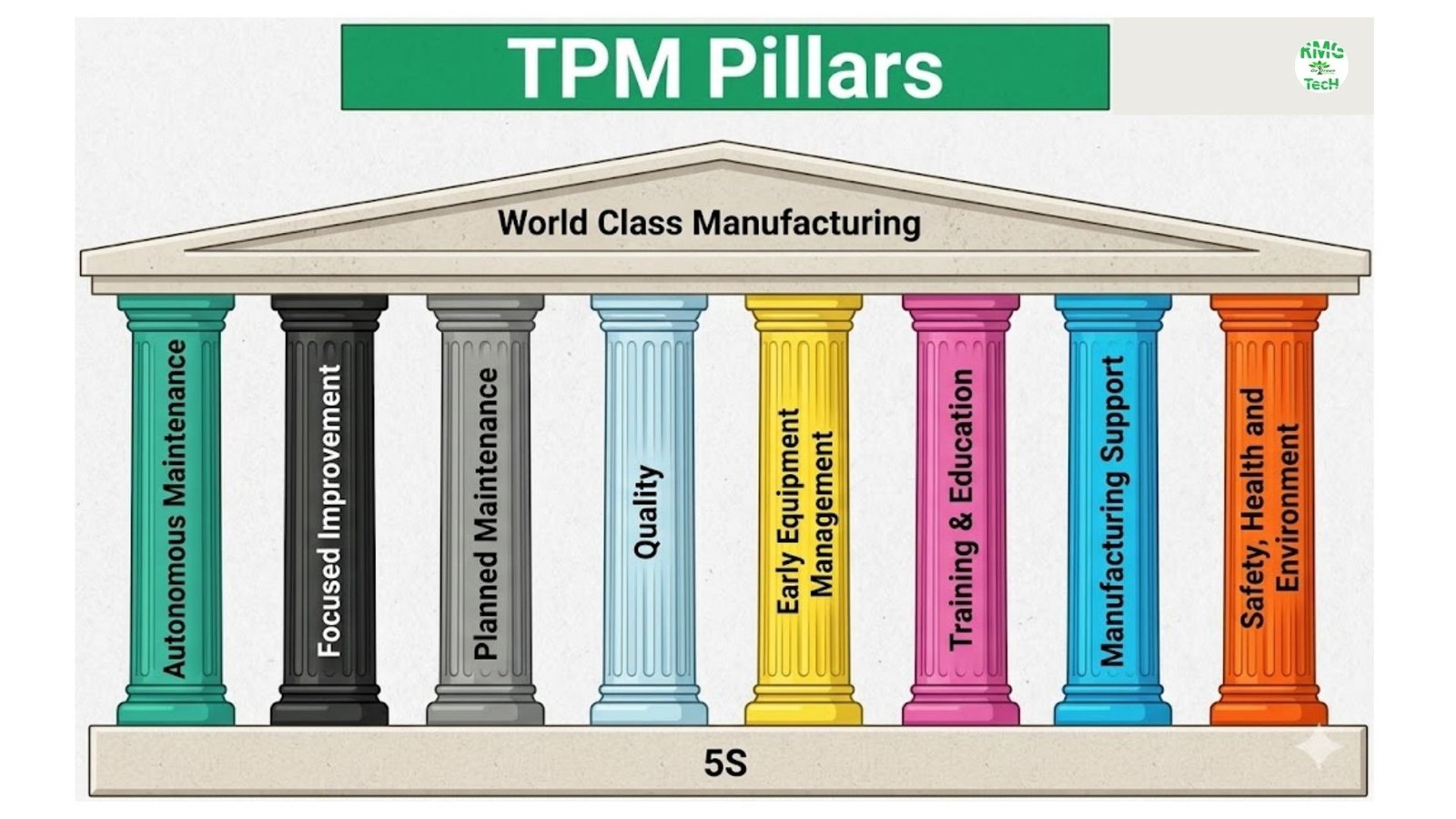
Central to the TPM philosophy are its eight pillars: Autonomous Maintenance, Planned Maintenance, Focused Improvement, Education & Training, Early Equipment Management, Quality Maintenance, Office TPM, and Safety, Health & Environment.
Implementing TPM
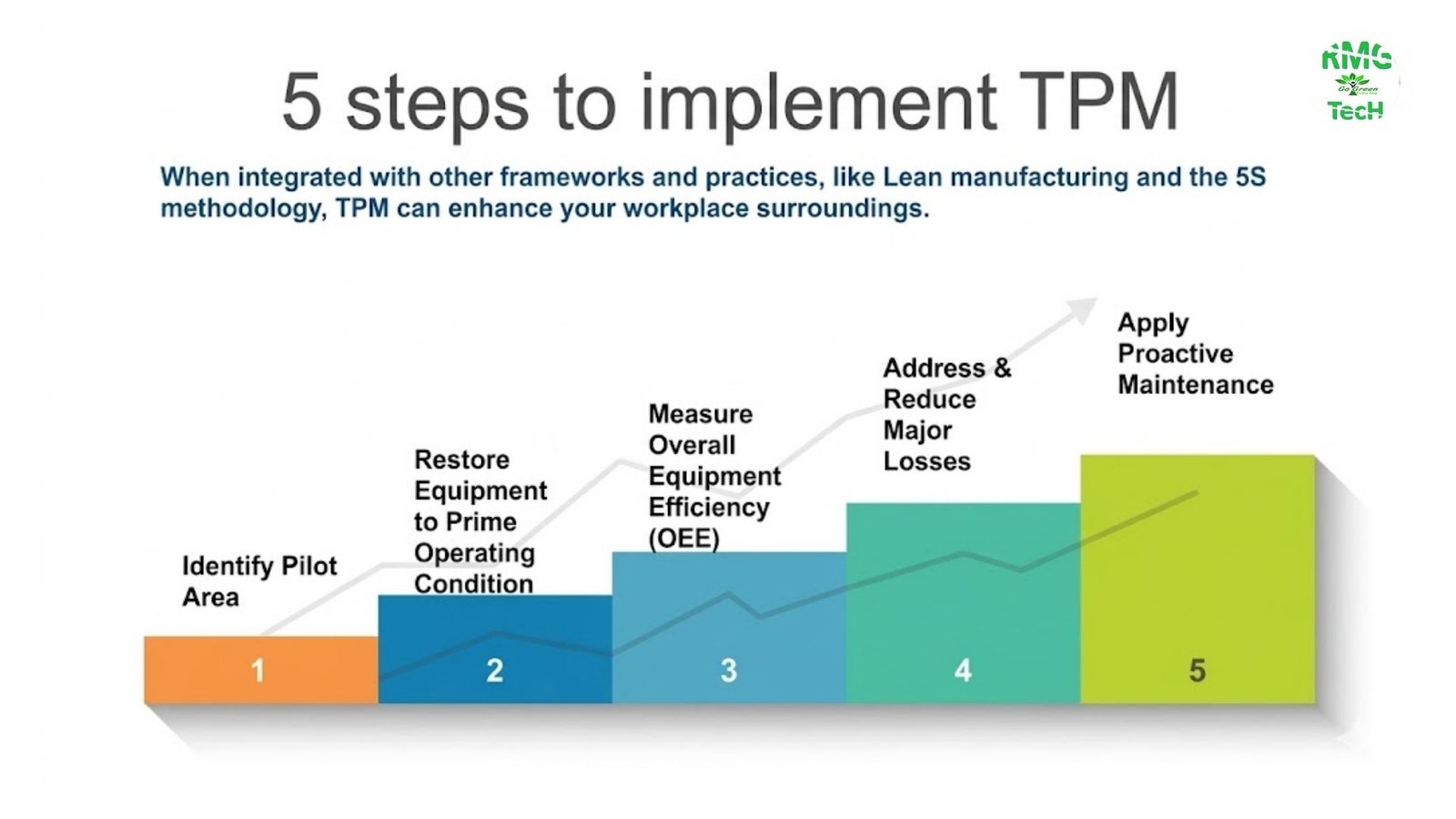
Incorporating TPM involves aligning its principles with the agile and responsive nature of the organizational workflow, ensuring that maintenance is a integrated part of daily production tasks.
Visual Management and 5S in TPM
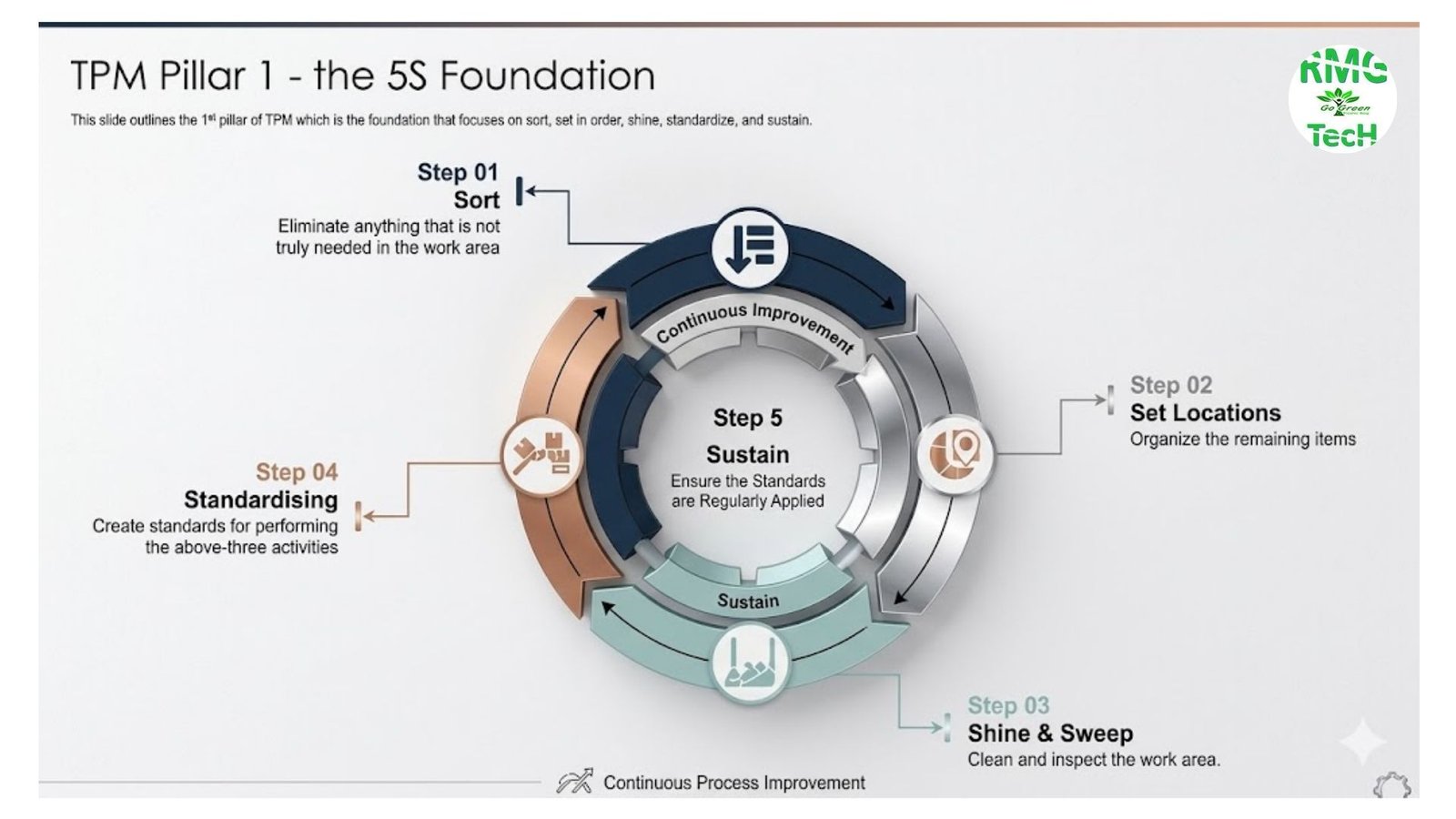
Visual Management and 5S principles are integral components of TPM implementation. Visual cues and organized workspaces enhance communication and efficiency.
Visual Management
Visual Management involves using visual cues, charts, and scorecards to monitor key performance indicators (KPIs) related to equipment efficiency. Incorporating visual elements into project management tools ensures transparent communication and progress tracking.
5S Principles
TPM's commitment to simplicity resonates with 5S principles – Sort, Set In Order, Shine, Standardize, and Sustain. Adopting these principles enhances the organization's ability to maintain an efficient and clutter-free workspace, aligning with a clean and streamlined design philosophy.
Equipment Loss and Overall Equipment Effectiveness (OEE)
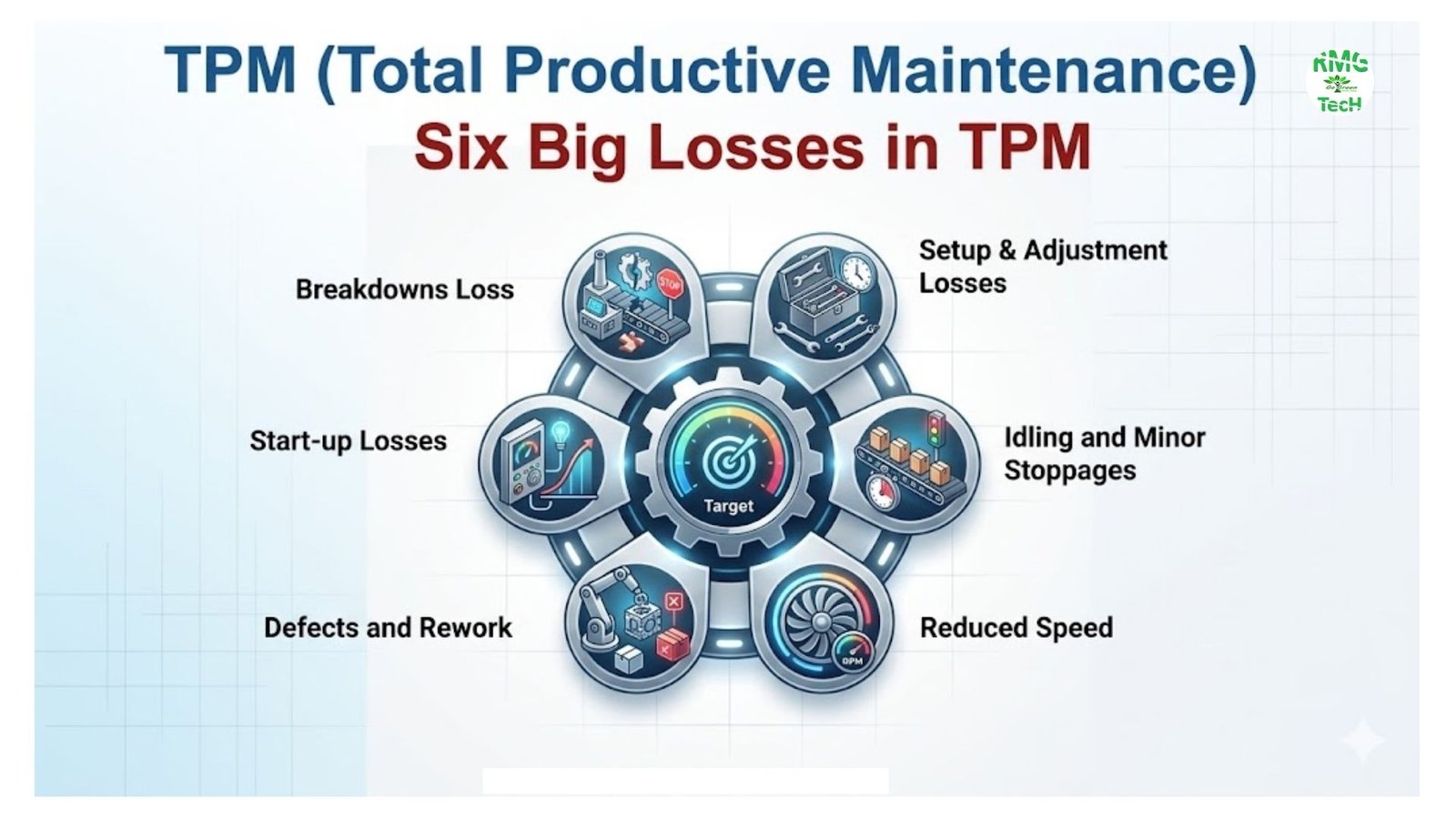
An essential aspect of TPM is understanding and mitigating equipment losses. The concept of Overall Equipment Effectiveness (OEE) plays a pivotal role in gauging equipment performance through Availability, Performance, and Quality.
Strategies for Zero Breakdowns
In an environment where responsiveness is key, strategies for achieving zero breakdowns involve proactive maintenance, regular monitoring, and rapid response to identified issues.
Conclusion
Total Productive Maintenance, with its proactive and collaborative approach, aligns seamlessly with the goals of modern manufacturing. By implementing TPM practices, organizations can unlock operational excellence, reduce downtime, and enhance overall efficiency. Visual Management, 5S principles, and a focus on continuous improvement contribute to a holistic approach that truly resonates.