Mastering Failure Mode
& Effects Analysis
A comprehensive guide to FMEA — understanding how to proactively identify, prioritise, and eliminate potential failures before they reach the customer or cause harm.
What is FMEA?
Failure Mode and Effects Analysis (FMEA) is a systematic, proactive methodology used to identify potential failure modes within a system, product, or process — and to evaluate the effects those failures could have on performance, safety, and customer satisfaction — before they occur.
FMEA is an inductive, bottom-up analysis technique that asks three fundamental questions for every component and process step: What could go wrong? What happens if it does? How likely is it, and how bad would it be?
Rather than reacting to failures after the fact, FMEA empowers teams to engineer reliability in from the start. It ranks risks using a Risk Priority Number (RPN) and drives corrective actions to reduce or eliminate the most critical failure modes before they reach customers or cause safety incidents.
An ounce of prevention is worth a pound of cure — FMEA is engineering's way of making prevention systematic and measurable.
— Adapted from Benjamin FranklinHistory & Origins
FMEA was born out of the need for extreme reliability in high-stakes environments. Its evolution spans over seven decades across military, aerospace, automotive, and manufacturing domains.
The U.S. Armed Forces introduced FMEA as a reliability evaluation method for weapons systems. The goal was to classify failures by their impact on mission success and personnel safety.
NASA adopted FMEA to ensure astronaut safety. Every subsystem was rigorously analysed to prevent catastrophic failures. The Apollo missions placed FMEA at the centre of aerospace engineering culture.
Ford introduced FMEA to the automotive world following the infamous Pinto fuel tank case. It rapidly became an industry standard, later codified by AIAG for all major OEMs.
FMEA is now embedded in international quality standards including IATF 16949, IEC 60812, and various ISO frameworks — spanning healthcare, software, food safety, and beyond.
Types of FMEA
FMEA is not a one-size-fits-all tool. It comes in several forms, each tailored to a specific stage of the product or process lifecycle. Choosing the right type is critical to getting actionable results.
Analyses the product design before manufacturing begins. Focuses on how design weaknesses could lead to failures in end use.
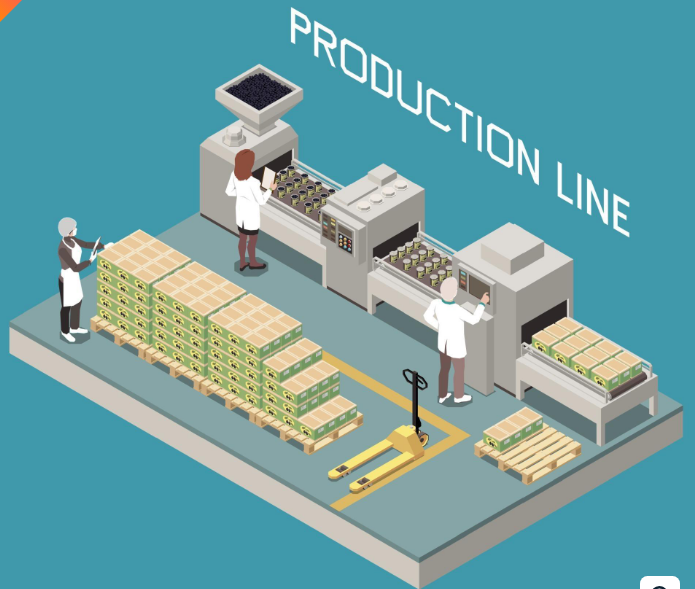
Evaluates manufacturing and assembly processes. Identifies where variation or errors in the process could produce defective output.
Examines interactions between subsystems. Used early in concept development to assess the system-level architecture for failure risks.
Focuses on manufacturing equipment and machinery. Helps prevent breakdowns and safety incidents caused by equipment failure modes.
An extended version used in defence and aerospace to formally rank failures by their criticality level alongside the standard RPN.
Adapted for clinical processes and medical devices. Focuses on patient safety and regulatory compliance (FDA, ISO 14971).
RPN — Risk Priority Number
At the core of FMEA is the Risk Priority Number (RPN) — a numerical score that quantifies the risk level of each failure mode. It is calculated by multiplying three independent ratings, each scored on a scale of 1 to 10.
How serious is the effect of the failure on the customer or system? (1 = negligible, 10 = catastrophic/safety-critical)
How frequently is this failure mode likely to happen? (1 = extremely unlikely, 10 = near certain/frequent)
How well can current controls detect the failure before it reaches the customer? (1 = almost certain to detect, 10 = undetectable)
A high RPN signals that a failure mode is severe, likely, and hard to detect — and demands immediate corrective action. However, teams should also pay attention to any failure mode with a Severity rating of 9 or 10, regardless of RPN, since catastrophic safety failures warrant action even when rare.
The 7-Step FMEA Process
FMEA is most effective when followed as a structured, team-based process. The following seven steps form the backbone of a rigorous FMEA study, applicable to both design and process contexts.
Establish the boundaries of the analysis — what system, subsystem, or process is being studied. Define the customer and their requirements.
Form a cross-functional team with engineering, quality, manufacturing, and customer-facing expertise. FMEA is never a solo activity.
Document every function or process step being analysed. For DFMEA list component functions; for PFMEA list each manufacturing step.
For each function, brainstorm all the ways it could fail to perform its intended purpose. Be exhaustive — include edge cases.
For each failure mode, determine the effect on the customer and trace back to root causes using tools like Fishbone or 5-Why.
Rate Severity, Occurrence, and Detection for each failure mode. Calculate RPN = S × O × D and rank failure modes by priority.
Assign corrective actions for high-RPN items with owners and deadlines. Re-calculate RPN after actions to verify improvement.
FMEA Worksheet — Sample
The FMEA worksheet is the primary working document. Each row represents one failure mode, and the team collaboratively fills in all columns. Below is a sample PFMEA worksheet for an automotive welding process.
| Process Step | Potential Failure Mode | Effect of Failure | S | Potential Cause | O | Current Controls | D | RPN | Recommended Action |
|---|---|---|---|---|---|---|---|---|---|
| Spot Welding | Insufficient weld penetration | Joint failure under load — structural risk | 9 | Electrode wear, incorrect pressure | 4 | Visual inspection every 100 parts | 6 | 216 | Implement in-process weld monitoring sensors |
| Part Loading | Incorrect part orientation | Weld in wrong position — scrap / rework | 7 | No poka-yoke fixture, operator error | 5 | Operator training, SOP | 5 | 175 | Design error-proof loading fixture |
| Welding | Weld spatter on mating surface | Assembly interference, cosmetic defect | 5 | Excessive current, worn electrode cap | 6 | Periodic electrode cap replacement | 4 | 120 | Automatic cap-dressing cycle every 500 welds |
| Inspection | Missed weld (skipped station) | Missing joint — potential field failure | 9 | PLC sequencing error, sensor bypass | 2 | End-of-line weld count check | 3 | 54 | Add redundant sensor check to PLC sequence |
| Cooling | Insufficient cooling time | Residual stress, micro-cracking | 6 | Conveyor speed too high, timer fault | 3 | Cooling time set in PLC recipe | 2 | 36 | Add PLC alarm if conveyor exceeds speed threshold |
▲ RPN ≥ 200 requires immediate action | RPN 100–199 requires planned action | RPN < 100 monitor and maintain current controls.
Industry Applications
FMEA is one of the most widely adopted risk analysis tools across industries. Wherever safety, reliability, and quality matter — FMEA is at work.
Mandatory under IATF 16949. Applied to every new vehicle design and assembly process globally.
Core to DO-178C and ARP4761. Ensures flight-critical systems meet safety integrity requirements.
Required by ISO 14971 for risk management of all medical devices. Reduces patient harm risk.
Used to evaluate PCB designs, semiconductor processes, and consumer electronics reliability.
PFMEA drives zero-defect programmes in lean factories, reducing scrap and warranty costs.
Integrated with HACCP to identify food safety failure points across the supply chain.
- Prevents failures before they reach customers
- Reduces warranty costs and field returns
- Improves product and process reliability
- Supports regulatory compliance (ISO, FDA, IATF)
- Builds cross-functional team knowledge
- Creates living documentation for future projects
- Conducted too late — after design is frozen
- RPN used as the only risk indicator
- Actions assigned but never tracked to closure
- Treated as a paperwork exercise only
- Team lacks cross-functional diversity
- FMEA not updated after design changes
Summary
FMEA is one of the most powerful risk management tools available to engineers, quality professionals, and operations teams. Its strength lies not just in the RPN number, but in the team conversations and deep product knowledge it generates along the way.
Key Takeaway
Mastering FMEA means shifting your organisation's mindset from reactive firefighting to proactive prevention. When done rigorously — with the right cross-functional team, at the right time, and followed through with disciplined corrective actions — FMEA transforms risk from an uncertainty into a managed, measurable, and improvable variable. The best FMEA is not a document; it is a living conversation about quality.